


Oct 05, 2018 Auto-tuning Feature in Windows 10 Q.1: What is Auto-tuning Feature in Windows 10 Home? Q.2: What is it's advantage and significance in Windows 10 Home? Q.3: Is any problem will be caused, if this feature will be disabled in. Mar 28, 2019 Windows 10 optimized features in the TCP/IP stack, including CTCP, and TCP Window Auto-Tuning. The new implementation works much better by default than previous Windows versions with broadband internet connections.
-->Applies to: Windows Server (Semi-Annual Channel), Windows Server 2016
You can use this topic to learn about performance tools.
This topic contains sections about the Client to Server Traffic tool, TCP/IP Window Size, and Microsoft Server Performance Advisor.
Client to Server Traffic tool
The Client to Server Traffic (ctsTraffic) tool provides you with the ability to create and verify network traffic.
For more information, and to download the tool, see ctsTraffic (Client-To-Server Traffic).
TCP/IP Window Size
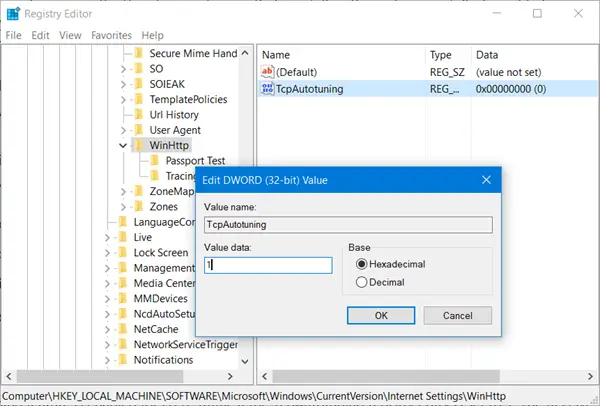
How To Determine If Auto-tuning Is On Windows 10 Free
For 1 GB adapters, the settings shown in the previous table should provide good throughput because NTttcp sets the default TCP window size to 64 K through a specific logical processor option (SO_RCVBUF) for the connection. This provides good performance on a low-latency network.
In contrast, for high-latency networks or for 10 GB adapters, the default TCP window size value for NTttcp yields less than optimal performance. In both cases, you must adjust the TCP window size to allow for the larger bandwidth delay product.
You can statically set the TCP window size to a large value by using the -rb option. This option disables TCP Window Auto-Tuning, and we recommend using it only if the user fully understands the resultant change in TCP/IP behavior. By default, the TCP window size is set at a sufficient value and adjusts only under heavy load or over high-latency links.
Microsoft Server Performance Advisor

How To Determine If Auto-tuning Is On Windows 10 1
Microsoft Server Performance Advisor (SPA) helps IT administrators collect metrics to identify, compare, and diagnose potential performance issues in a Windows Server 2016, Windows Server 2012 R2, Windows Server 2012, Windows Server 2008 R2, or Windows Server 2008 deployment.
SPA generates comprehensive diagnostic reports and charts, and it provides recommendations to help you quickly analyze issues and develop corrective actions.
For more information and to download the advisor, see Microsoft Server Performance Advisor in the Windows Hardware Dev Center.
For links to all topics in this guide, see Network Subsystem Performance Tuning.